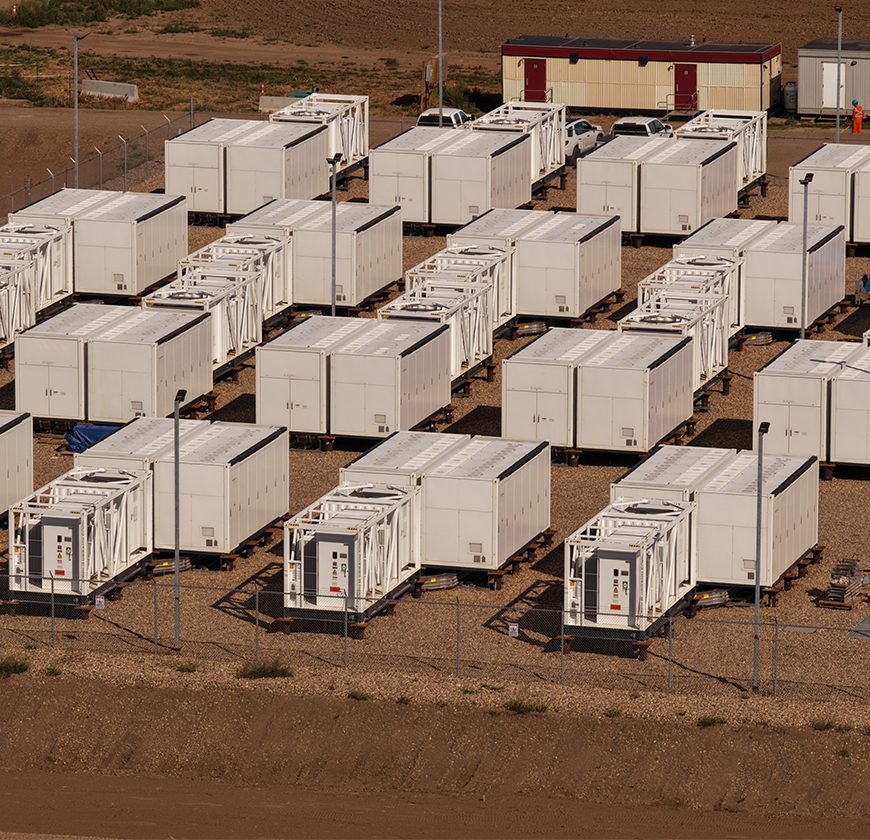
Our Expertise in Battery Storage
We made our first investment in battery energy storage in 2022, acquiring a majority stake in the 250 MW / 1,000 MWh Oneida Energy Storage project in Haldimand County, Ontario. In April 2025, we delivered the project into commercial operations ahead of schedule, under budget, and with zero lost-time incidents.
In 2026, we delivered the 80 MW / 160 MWh Jurassic BESS project in Cypress County, Alberta, ahead of schedule and under budget. We also closed financing and broke ground on the Mieczysławów (200 MW / 800 MWh) and Kamionka (100 MW / 400 MWh) battery energy storage projects in Poland, representing a combined 300 MW / 1.2 GWh of capacity.


battery packs in operation

/1000 MWh of installed capacity

in construction


Battery energy storage systems (BESS) are capacity resources that work to store surplus energy from electricity grids during off-peak hours and release it during peak hours, enhancing system stability and reliability. Storage supports renewable energy integration, and helps strengthen electricity grids to meet growing energy and capacity needs.


The Oneida Energy Storage Project stands as a landmark in Canada’s growing energy storage sector and a blueprint for future storage developments. Built through a groundbreaking partnership between Northland Power, Six Nations of the Grand River Development Corporation (SNGRDC), NRStor, Aecon and Mississaugas of the Credit Business Corporation (MCBC), the project demonstrates the power of collaboration between industry and Indigenous communities.
With 278 battery packs supported by 170 transformers, Oneida is among the most advanced storage facilities in the country with the ability to power a city the size of Oshawa for one hour. Built by a local workforce, construction required over 300,000 hours on site and the dedication of 40 local Indigenous workers, underscoring its role as both a technological achievement and a community-driven project.